Letter A in Machine Embroidery: A Comprehensive Overview
When it comes to machine embroidery, the letter "A" is a fundamental element that appears in countless designs. Whether you're creating custom apparel, home décor, or promotional items, understanding the nuances of how the letter "A" is represented in various embroidery file formats can significantly impact your workflow and final results. This article explores the practical aspects of working with the letter "A" in different embroidery file types, focusing on its design characteristics, usability, and real-world applications.
Understanding the Letter A in Embroidery Designs
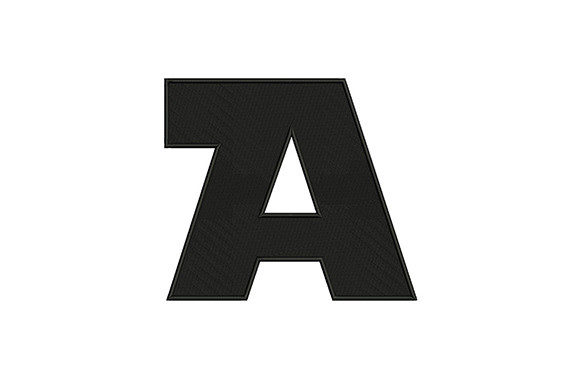
The letter "A" is one of the most commonly used characters in embroidery. Its simple yet distinctive shape makes it highly versatile for both text-based and graphic designs. In machine embroidery, the letter "A" is typically composed of a triangle with a horizontal bar across the middle, forming a clear and recognizable form. The design's simplicity allows for efficient stitching, making it ideal for projects where speed and clarity are priorities.
Embroidery software often provides pre-designed lettering options, including the letter "A," which can be customized in size, font style, and placement. However, when working with specific file formats like EMBROIDERY FILE FORMATS 10O, ART, CND, DSB, DST, DSZ, EXP, HUS, JEF, JEF, PCS, PEC, PES, SEW, TAP, VIP, VP3, VP4, XXX, it's essential to understand how these files handle the letter "A" in terms of stitch density, color usage, and overall quality.
Key Characteristics of the Letter A in Embroidery Files
One of the defining features of the letter "A" in embroidery is its use of a single color. With 0 color changes, the letter "A" is typically stitched in one continuous thread, ensuring a clean and professional look. This characteristic makes it particularly useful for minimalist designs, monogramming, and logos where a single color scheme is preferred.
The simplicity of the letter "A" also contributes to its reliability in different embroidery machines. Most modern machines can handle single-color stitches without issues, reducing the likelihood of thread breaks or misalignment. Additionally, the lack of color changes means less time spent on setup and fewer potential points of failure during the stitching process.
Design Flexibility and Usability
Despite its straightforward appearance, the letter "A" offers a range of design possibilities. It can be adapted into various fonts, from classic serif styles to modern sans-serif variations. This flexibility allows designers to match the letter "A" to the aesthetic of their project, whether it's formal, casual, or artistic.
When working with embroidery file formats, the letter "A" is often included as part of larger text blocks or integrated into more complex graphics. For example, in a logo design featuring the letter "A" alongside other elements, the file must ensure that the letter remains sharp and well-defined. This requires careful planning in the design phase to avoid issues such as distorted shapes or uneven stitching.
Performance in Real-World Applications
In practical use, the letter "A" performs reliably across a wide range of embroidery projects. Its simplicity ensures that it can be stitched quickly and efficiently, even on smaller or less advanced machines. For professionals and hobbyists alike, this makes the letter "A" a valuable asset in their design toolkit.
Consider a scenario where a small business owner needs to create custom t-shirts for a local event. Using the letter "A" in a single-color design allows for fast production without compromising quality. Similarly, in home embroidery projects, the letter "A" can be used to personalize items such as towels, pillows, or bags with minimal effort and cost.
Quality and Consistency Considerations
While the letter "A" is generally easy to work with, achieving high-quality results requires attention to detail. Factors such as stitch count, thread tension, and stabilizer use can all affect the final appearance of the letter. For instance, if the letter "A" is too small or the stitches are too dense, it may appear jagged or distorted.
Consistency is another important factor. When using the letter "A" in large-scale projects, such as bulk orders or repeated designs, it's crucial to maintain uniformity across all pieces. This involves ensuring that each instance of the letter "A" is properly aligned and that the stitching pattern remains consistent throughout.
Who Benefits Most from the Letter A?
The letter "A" is particularly beneficial for individuals and businesses that prioritize efficiency, clarity, and simplicity in their embroidery work. Entrepreneurs launching a custom embroidery service, for example, can rely on the letter "A" to create quick and reliable designs that meet client expectations. Similarly, educators and students studying embroidery techniques may find the letter "A" useful as a foundational element for learning basic stitching skills.
For creators and marketers, the letter "A" can serve as a powerful visual tool in branding and promotional materials. Its clean lines and universal recognition make it an effective choice for logos, slogans, and other graphic elements that need to be easily identifiable at a glance.
Practical Recommendations for Working with the Letter A
To maximize the effectiveness of the letter "A" in your embroidery projects, consider the following recommendations:
- Choose the right file format: Ensure that the embroidery file you use supports the letter "A" in a way that aligns with your machine's capabilities and the desired outcome.
- Test before mass production: Always test the letter "A" on a small scale to verify that it appears as intended and that the stitching is accurate.
- Optimize for clarity: Adjust the design to ensure that the letter "A" is large enough and well-proportioned for the intended application.
- Use appropriate stabilizers: Stabilizers help prevent distortion, especially when working with delicate fabrics or intricate designs.
Limitations and Potential Challenges
While the letter "A" is generally straightforward to work with, there are some limitations to be aware of. For instance, in complex designs that require multiple colors or intricate details, the letter "A" may not be the best choice. Additionally, if the letter "A" is part of a larger text block, ensuring consistency and readability across all letters can be challenging.
Another potential issue arises when working with older or less advanced embroidery machines. These machines may have difficulty handling certain file formats or stitching patterns, which could lead to inconsistencies in the final product. It's always a good idea to check compatibility before proceeding with large-scale projects.
Conclusion: The Value of the Letter A in Embroidery
The letter "A" holds a unique place in the world of machine embroidery due to its simplicity, versatility, and reliability. Whether you're a seasoned professional or a beginner exploring the craft, understanding how to effectively use the letter "A" in different embroidery file formats can enhance your workflow and improve the quality of your finished products.
By focusing on practical considerations such as design clarity, file compatibility, and machine performance, you can ensure that the letter "A" serves its purpose effectively in a wide range of projects. As with any design element, the key to success lies in thoughtful planning, careful execution, and a commitment to quality. Whether you're creating custom apparel, promotional items, or personal accessories, the letter "A" remains a valuable and enduring component of embroidery design.